


God’s plans for my kids are better than mine
How a teacher’s prayer lifted my eyes.
Towards the end of last term, I sat in a meeting with our youngest child’s Kindergarten teacher and the Infants Learning Support leader. They had called me in to explain that our son is not keeping up with his peers in literacy and numeracy and needs one-to-one support much of the time. At the meeting we agreed on a plan for our son to continue receiving intensive support for the next six months. After that we may be able to investigate whether or not he has an underlying learning difficulty.
This was not my plan for our son’s first year of school! I assumed that he would follow in his three brothers’ footsteps—learning to read and do maths for the sheer joy of the challenge and grasping new ideas with curiosity and delight. In our family, we love to read! In our family, we love to learn!
In the meeting, I tried not to despair as I faced the real possibility that our youngest son might find learning difficult for another 11 and a half years of schooling.
The following week, I was challenged about the plans I had for our eldest son too. He’s in Year 11 and had recently been through the process of applying to be a school prefect. I think he’s a wonderful young man with a lot to offer. He’s demonstrated leadership qualities in other contexts and is a very patient and encouraging older brother. He’s got involved in various aspects of school life and genuinely loves his school.
To be honest, I had taken it for granted that our son would be chosen as a prefect. But here’s the thing—he wasn’t. And I don’t know who was more disappointed—him or me.
This was not my plan for our son’s final years of school! I assumed that he would get to experience the responsibility and privilege of being a school prefect, just as I had. In our family, we are natural leaders!
A prayer that lifted my eyes
At the end of the meeting I had with our youngest son’s teacher, he offered to pray for our son. I was overcome with gratitude for a teacher who cared enough about our son not only to teach him, but also to pray for him. And God used that teacher’s prayer to lift my eyes and see things from God’s perspective. It went something like this:
Thank you, God, for the gifts and talents that you have given T. including his fun personality and outgoing nature. Thank you for the man you are forming him to be. We lift T. up to you and ask that you would continue to equip him for the good things that you have prepared for him to do in life. Please help us to know how best to support him in this. Amen.
This prayer reminded me that God’s plans for my children are bigger—and better—than mine. According to my narrow plans, I expect that my children will be natural learners or natural leaders; I think about the kind of jobs I hope they might do when they grow up; I expect them to like the same things that I like and be good at the same things I’m good at. I also fall into the trap of expecting my children to be similar to their siblings. I’ve realised that I have a fairly set expectation about what people will be like ‘in our family’.
Perhaps this is a natural tendency for most parents. Based on our own personalities and giftings, we think of our family as ‘academic’, ‘musical’, ‘sporty’, ‘social’, ‘creative’, ‘adventurous’, ‘relaxed’ and so on. But what if our children don’t fit this mould? What if they are not good at the things we highly prize?
His plans, not mine
I’m slowly learning to hand each of my children back over to God, and focus on his plans for them, not mine. I’m trying to let go of my expectations for our children and get to know who God has made them to be—uniquely handcrafted and one-of-a-kind. I’m learning to pray like our son’s teacher—thanking God for the unique personality and gifting that he has given to each child, and trusting in his good plans for their lives, whatever their abilities.
After those challenging couple of weeks, I’ve started to think ‘outside the box’ for our sons. Our youngest may never excel in the classroom—but I think he would love to sing in a choir or play a team sport. Our eldest may not be wearing a prefect badge next year—but he might shine on stage in the next school production. Whatever successes or disappointments come their way, I will continue to remind them that God has made each one of us differently and has different plans for our lives.
For Christians there is actually great freedom in how we serve God. Our kids might serve him as brain surgeons or aerospace engineers—or as plumbers or personal carers. Whatever else we teach our children, let us make it crystal clear that outward success and achievement is not what life is about. Whether they have high-flying careers or quiet, humble callings, the only thing that really matters is that our children learn to love God and love their neighbours.
And we know that in all things God works for the good of those who love him, who have been called according to his purpose. For those God foreknew he also predestined to be conformed to the image of his Son, that he might be the firstborn among many brothers and sisters. (Romans 8:28–29).
---
Harriet Connor is the Content Editor for Growing Faith and the editor of the two volumes of Parenting in God's Family: Biblical Wisdom for Everyday Issues. She is the author of Families in God's Plan: 12 Foundational Bible Studies (Youthworks Media, 2021) and Big Picture Parents: Ancient Wisdom for Modern Life (Wipf and Stock, 2017). She lives on the Central Coast of NSW with her husband and four sons.
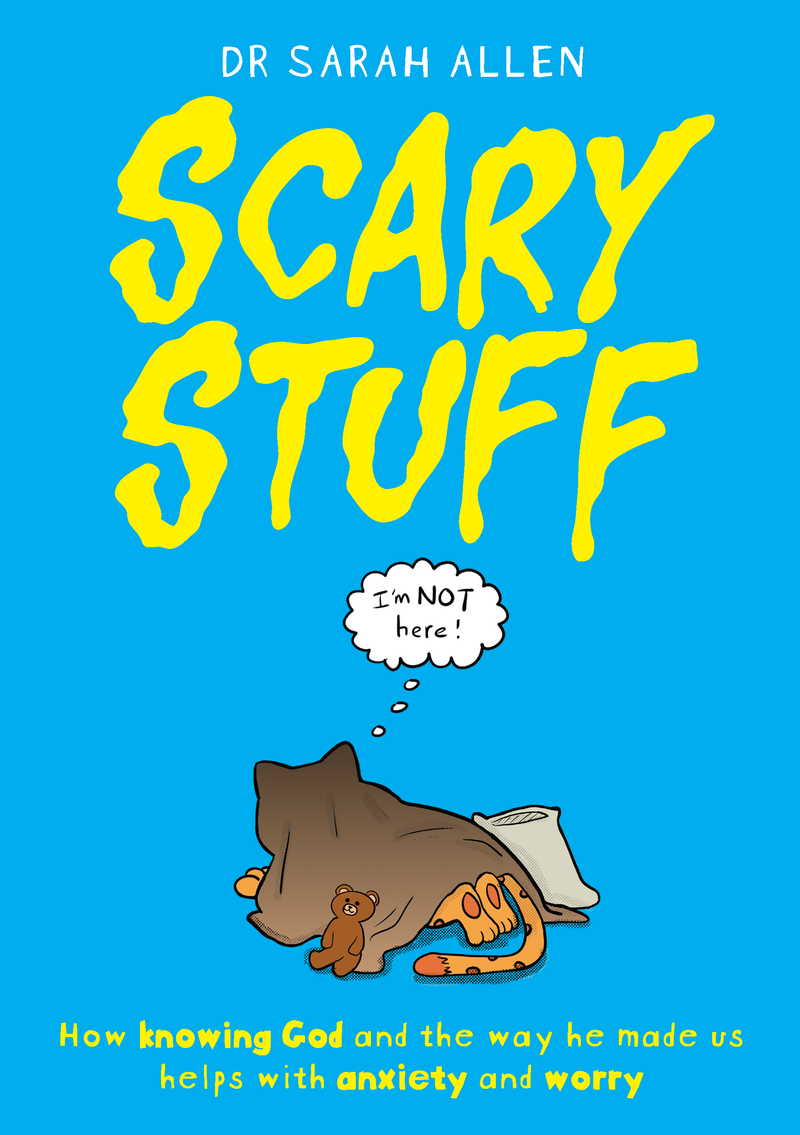
Scary Stuff
Dr Sarah has met lots of kids just like you, kids who are loved by God and who have worries they need to face. She’ll help you discover what fear is all about, how your body and mind work, and—best of all!—God himself (the one who’s bigger than the scary stuff and really can help!). You’ll explore 10 Bible passages with your coach (hello parent or trusted adult!) and do 10 training sessions by yourself to use your upsetting experiences as a way to grow. The bad things won’t be gone, but your feelings about them will change as you come to know God better.
For more articles from Growing Faith, subscribe to our monthly e-newsletter.
To hear about the latest books and resources from Youthworks Media, subscribe here.
Related Posts: