

How to navigate Halloween
Considering different Christian perspectives.
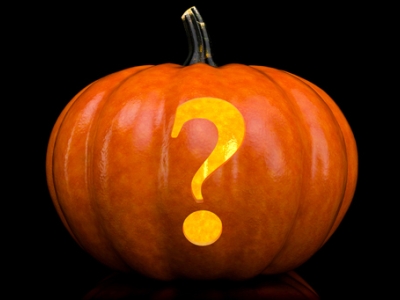
It’s that time of year again! When Christian kids start asking ‘Can we do Halloween?’ and Christian parents can’t decide—or agree—on how to answer.
I have to confess that my views on Halloween keep changing and developing with the years. And whenever I do venture to publish some thoughts on the topic, sincere Christians suggest that I’ve got it wrong.
So, how can Christian parents work out what to think and say when Halloween rolls around each year? Here are some different perspectives and resources to consider.
A gracious approach
Last year, Cass Backhouse offered a helpful ‘Halloween heart check’ encouraging us with seven biblical principles to help Christians think the issue through with conviction and grace. She rightly observed that Bible-believing Christians will come to different opinions, and, in the spirit of Romans 14, we need to respect one another’s decisions without accusing others of being spiritually immature.
Halloween’s Christian(ish) origins
Some people emphasise the pagan predecessor of Halloween, Samhain (pronounced 'sow-in')—a Celtic festival marking the transition from harvest time to winter (in the northern hemisphere). This was a ‘liminal’ festival, when it was believed that the boundary between the physical and spiritual realms became thin and the spirits of the dead would revisit their homes.
However, the Christian festival of All Saints Day, preceded by ‘All Hallows’ Eve’, also has a long history, dating back to the late 300s. This day celebrated the victory of the saints, especially Christian martyrs, in union with Christ and included honouring and (before the Reformation) praying for the dead. During the eighth century Pope Gregory moved the date of this festival to November 1, and it subsequently became a major Christian holiday.
Many of the traditions of Halloween, such as ‘trick or treating’, probably trace their origins back to this Christian festival, rather than anything pagan. In an interview with Undeceptions podcast, folklorist Dr Frances Young explains that our knowledge of pagan or pre-Christian practices is limited, and we should be wary of assuming that all surviving ‘folk’ practices have pagan origins. He describes how most of the Halloween traditions, such as carving jack-o-lanterns, started in Ireland and were brought to America by Irish immigrants.
Some Christians, such as James B. Jordan, believe that Christian Halloween traditions were a way of ‘mocking’ of the Devil. He explains it like this:
‘The concept, as dramatised in Christian custom, is quite simple: On October 31, the demonic realm tries one last time to achieve victory, but is banished by the joy of the Kingdom. What is the means by which the demonic realm is vanquished? In a word: mockery. Satan’s great sin (and our great sin) is pride. Thus, to drive Satan from us we ridicule him … because he has lost the battle with Jesus and he no longer has power over us.’
This approach to Halloween—as a way of mocking the defeated forces of darkness—is also cleverly expressed in SpeakLife’s evangelistic video, ‘Halloween: Trick or Treat?’.
Christians who emphasise this Christian meaning of Halloween may feel that they and their children can participate in good conscience.
… and its modern form
However, for many Christians, Halloween’s Christian(ish) origins aren’t enough to redeem the festival. That’s because they are more concerned with how Halloween is actually celebrated today.
First of all, the modern iteration of Halloween was imported to Australia not through church tradition, but through American popular culture. The people around us who celebrate Halloween certainly don’t think they are participating in a Christian festival designed to mock the Devil. The modern celebration of Halloween is mostly a commercial festival featuring costumes and decorations that are designed to scare—and lots of lollies.
Some Christians also point to the fact that neo-paganism is on the rise, and festivals like Halloween (or rather Samhain) can be a time of increased pagan spiritual practices (although in the southern hemisphere, the timing of Halloween corresponds to the pagan festival of Beltane, rather than Samhain)).
In view of this, some Christian families may choose not to participate in Halloween, because they see it as ‘celebrating’ dark and scary things, rather than celebrating the light and life that Jesus brings.
A gospel opportunity
Whether or not they actively participate, many Christians focus on the fact that Halloween is a gospel opportunity for our families and churches.
Firstly, Halloween is a great opportunity for parents to teach their own children that they have nothing to fear, because Jesus defeated all the powers of darkness on the cross.
Secondly, Halloween can be a great opportunity to show hospitality to the neighbours who come knocking on our door. We can offer lollies and perhaps a gospel story, tract or Bible verse that points people to Jesus, the light of the world. For ideas, you can listen to this Faith in Parents Podcast episode or find Halloween stories or tracts from Matthias Media and 10ofthose.
Finally, churches can make the most of Halloween by providing alternative celebrations or ‘light parties’ for children in their community to get together, hear the good news of Jesus and have fun—without being afraid!
Whatever we decide on the question of Halloween, let’s find ways for our families to live out our identity in Christ:
‘But you are a chosen people, a royal priesthood, a holy nation, God’s special possession, that you may declare the praises of him who called you out of darkness into his wonderful light.’ (1 Peter 2:9)
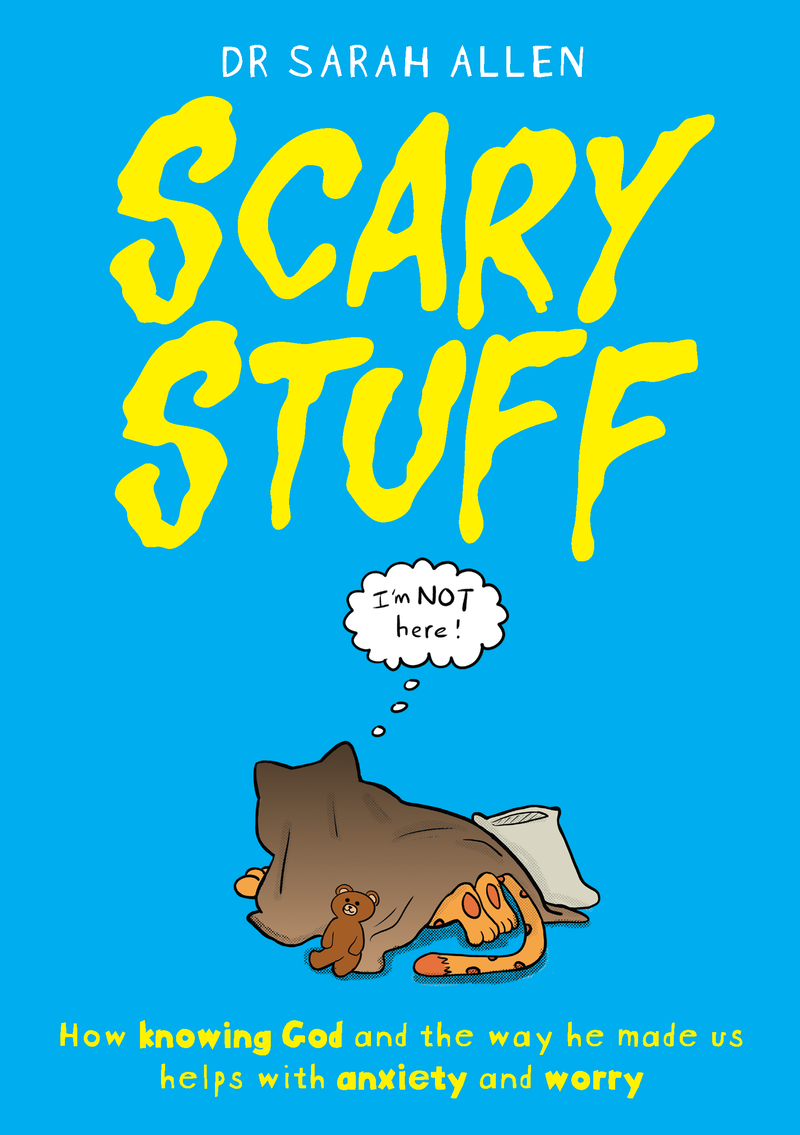
Scary Stuff
Dr Sarah has met lots of kids just like you, kids who are loved by God and who have worries they need to face. She’ll help you discover what fear is all about, how your body and mind work, and—best of all!—God himself (the one who’s bigger than the scary stuff and really can help!).
For more articles from Growing Faith, subscribe to our monthly e-newsletter.
To hear about the latest books and resources from Youthworks Media, subscribe here.
Related Posts: