

Mum/dad, why can’t we go on an overseas holiday?
Talking about comparisons, choices, circumstances and desires.
This afternoon, after the last day of the school term, our family is heading on holidays. We don’t do that very often, so we’re all quite excited. Where are we going? To Tamworth! (For those who don’t know, that’s a regional town about four hours away.) There are two reasons for going: we’ll be spending time with family who live there, and one of our sons is also playing in a hockey competition nearby.
Yet, as excited as we are, our school holiday plans seem pretty dull compared to what some of the families we know are doing. On more than one occasion, our kids have lamented the fact that among their friends, they feel like the only ones who have never been on an overseas holiday, or even on a plane. Every year or two, their friends seem to head off on adventures, whether to ‘resort’ destinations, like Fiji or Bali; to North America or Europe; or to Asian travel destinations (what’s with Japan, everyone?!).
With interest rates and the cost of living continuing to rise, I’m sure we’re not the only family staying close to home for holidays. So what do we say when our kids ask the question, ‘Mum/dad, why can’t we go on an overseas holiday?’
Comparison is deceptive
A good first response is another question: Why do you want to go overseas? If our children’s primary answer is ‘Because all my friends are’, then it’s a good opportunity to talk about the deceptive nature of comparisons. I’ve learnt this lesson myself when I’ve fallen into the trap of envying my friends’ holidays as displayed on social media. A glamorous-looking holiday is no guarantee of happiness. What is not depicted is the real reason for the holiday—perhaps a sad diagnosis or family crisis; not shown is the real cost in terms of overtime work and relationship strain; what we don’t see are the negative parts of holiday—the tummy bug, the sprained knee, the disasters, disagreements and disappointments (and other frankly ‘first-world’ problems!).
I hope that talking about the reality of overseas holidays might help our children to appreciate that every family experiences both highs and lows. Holidays are not a great measure of happiness.
Choices we make
When I was growing up, I thought my best friend’s family was richer than mine, because they had a pool and went on a trip to Disneyland. Looking back now, I know that probably wasn’t the case. It’s just that my parents chose to put a significant proportion of their earnings into my sister’s and my education.
When our children question our decisions about holidays (or other expenses), we try to avoid saying simply ‘Because we can’t afford it’. We think it’s more beneficial to talk about choices. We explain that we have a certain amount of income that can only stretch so far. We choose to spend that money on having a house to live in, good food to eat, a car to drive, Christian schooling and some extra activities like music and sport.
We explain that we could choose to save up for an overseas holiday, but that would mean no extra activities and much longer hours of work for mum and dad. My husband and I have made choices about the kind of work we do that prioritise being available to our children and our church over earning enough money to fund overseas trips. Some families may also make choices about holidays based on a commitment to reducing their environmental impact.
Circumstances we didn’t choose
Our ability to afford overseas holidays is not just about choice. Most Christian families across the world will never be in a position to afford one. Even in our relative wealth, we can be honest with our children about circumstances that have impacted us financially—as long as we can do this with a sense of confidence in God’s provision, rather than worry.
In our case, God has given us four children. The simple fact is that we need to spend more money on things like food, clothes and education than families with fewer children. An overseas holiday would also be proportionally more expensive for us.
We have also had to explain to our children that rising interest rates mean we have to spend much more of our income on housing than we used to. We point out that things like fuel and groceries also cost a lot more. In our family, we had a period when my husband was looking for full-time work for twelve months, so we had to use up any savings we had just to get by.
Personally, I need to be careful when I talk about money to our children, because I tend to have a ‘scarcity’ mindset—implying that there’s never quite enough to go around. When I hear my kids telling each other, ‘We probably can’t afford that’, I think I’ve probably communicated the wrong message. We need to remember that as Christians, we are the children of the King of the universe, who has lavished his love on us (1 John 3:1) and ‘richly provides’ everything we need (1 Timothy 6:17). We can teach ourselves and our children to be grateful for the abundance of what God has given us, not focus on the things we lack. As Jesus said:
‘Do not worry about your life, what you will eat or drink; or about your body, what you will wear. Is not life more than food, and the body more than clothes? Look at the birds of the air; they do not sow or reap or store away in barns, and yet your heavenly Father feeds them. Are you not much more valuable than they?’
Uncovering our desires
A discussion about overseas holidays can be a good opportunity to learn about our children’s desires. We can dig a little bit beneath the surface and ask why they want to go overseas. Is it the plane flight they are most excited to experience? Or are they attracted by the idea of a fancy hotel stay? Are there awe-inspiring natural landscapes that they want to see? Or places that have historical or cultural significance? Is it that our kids genuinely want to experience another culture, with its distinct cuisine, language and way of life?
As we talk through our children’s desires, we can gently question whether an overseas holiday is the only way to satisfy them. We can also explain if you go overseas when you are very young, you may not get the most out of the experience. My parents chose to wait until my sister and I were in our late teens to take us overseas, and I think that was wise.
Enjoying the dreaming
I like to tell our kids that the anticipation of a good thing, like an overseas holiday, is often better than the actual experience. So we could have all the fun of planning an overseas holiday without the expense! I think next time my kids ask to go on an overseas holiday, I’ll set them the task of doing the research. Where would you go? How would you get there? Where would you stay? What sights would you choose to see? What cultural experiences would you prioritise? What phrases would you need to learn in the local language? How much money would you need for sightseeing, accommodation, food and travel per day per person?
I think this would help our kids not only to enjoy learning about the people and places in God’s world, but also to appreciate the real cost of travelling overseas. I do hope that one day our family will be able to explore God’s world together, but for now, we can enjoy the dreaming—and thank God for a trip to Tamworth!
---
Harriet Connor is the Content Editor for Growing Faith and the editor of the two volumes of Parenting in God's Family: Biblical Wisdom for Everyday Issues. She is the author of Families in God's Plan: 12 Foundational Bible Studies (Youthworks Media, 2021) and Big Picture Parents: Ancient Wisdom for Modern Life (Wipf and Stock, 2017). She lives on the Central Coast of NSW with her husband and four sons.
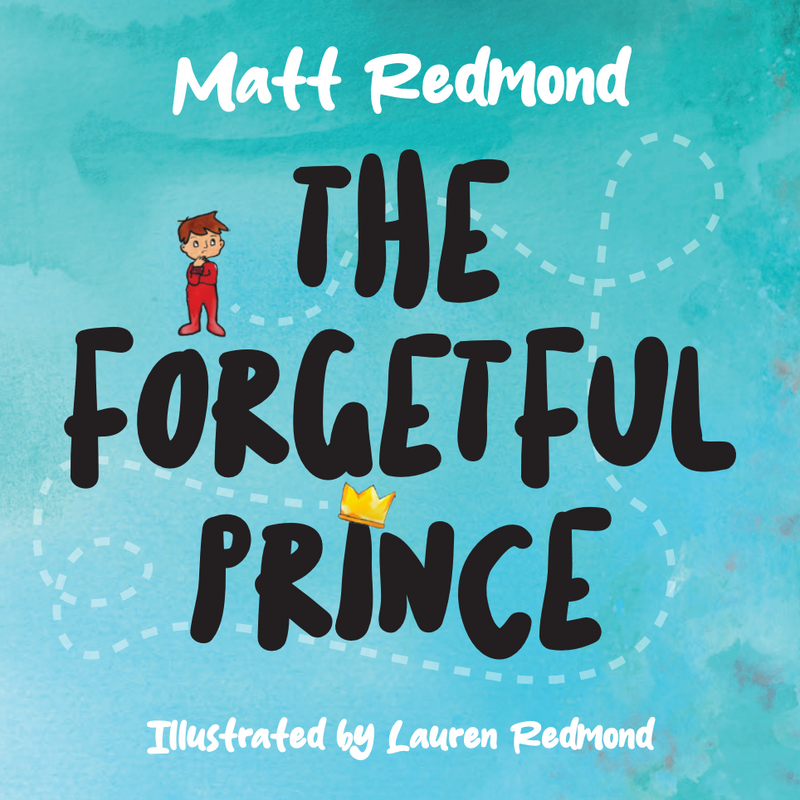
The Forgetful Prince
The Forgetful Prince tells the story of Atticus, a boy who is happy and clever but experiences a problem: he keeps forgetting the most important part of who he is—a prince! As he journeys through a jungle filled with colour and wonder, animal friends along the way help to remind him of his true identity.
For more articles from Growing Faith, subscribe to our monthly e-newsletter.
To hear about the latest books and resources from Youthworks Media, subscribe here.
Related Posts: